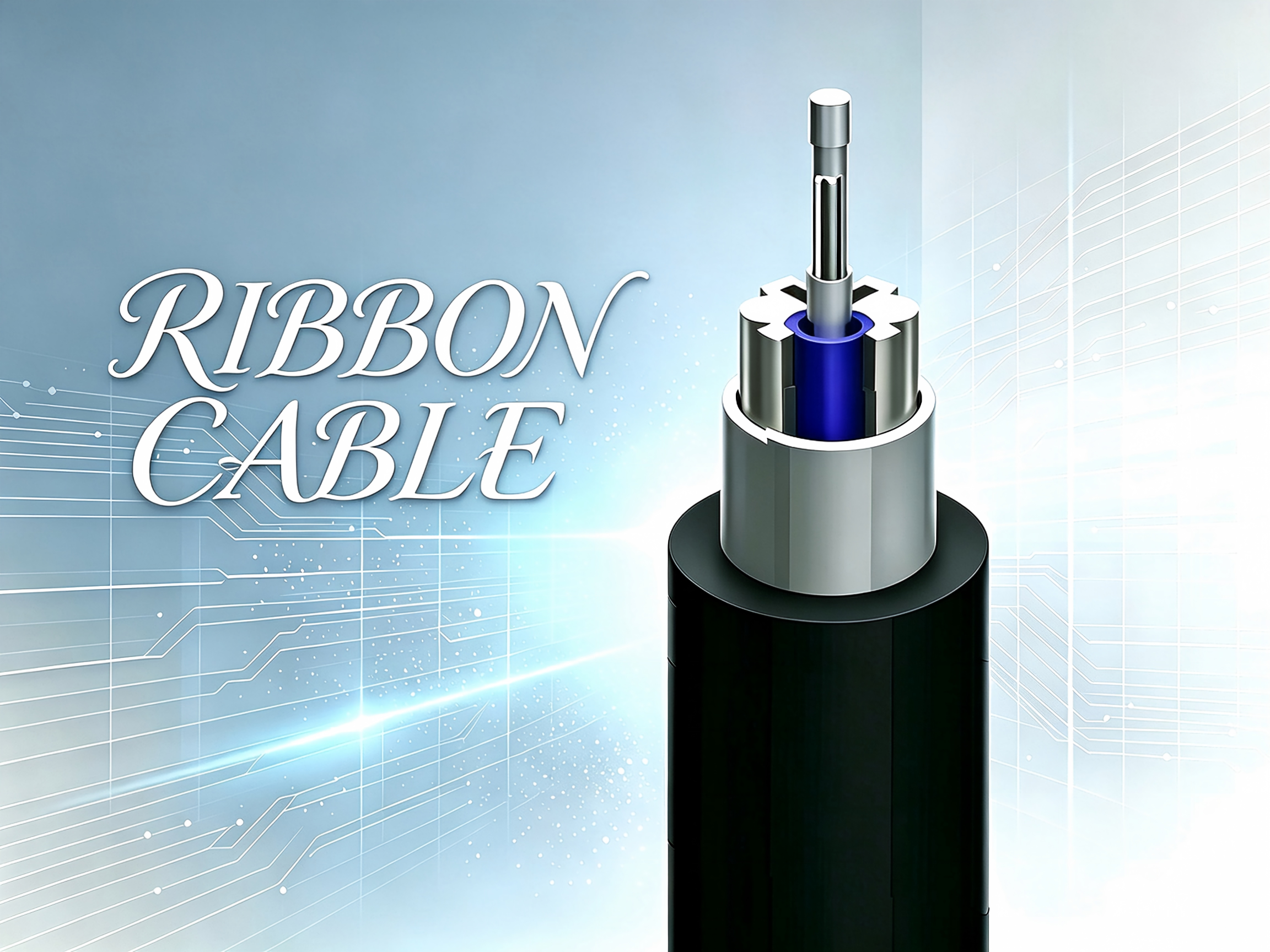
As the world grows more connected, the demand for faster and more reliable communication networks continues to soar. Among the many innovations shaping this landscape, ribbon cable stands out as a key enabler of modern infrastructure.
Unlike traditional cables that bundle individual fibers loosely, ribbon cable organizes fibers into flat, side-by-side arrays that resemble a ribbon. This simple yet ingenious design brings several important advantages.
Key Features
Higher Fiber Density
More fibers can fit into a single cable, enabling network builders to deliver greater capacity without installing significantly larger or heavier cables. This is especially valuable in crowded underground conduits or space-limited environments.
Faster Installation and Splicing
Because fibers are arranged in a neat, organized pattern, technicians can handle many fibers at once rather than one by one. This reduces labor time, lowers costs, and minimizes the risk of errors during network deployment.
Excellent Scalability
As demand for bandwidth grows, operators can expand capacity more easily without undertaking major physical reconstruction. This future-proof quality makes it an attractive choice for both urban and long-distance networks.
High Reliability
The structured layout protects fibers from stress and damage, helping to ensure stable performance over time, even in demanding conditions.
In short, ribbon cable represents a practical and forward-looking solution for building the high-capacity networks that tomorrow’s digital world will require. Its combination of efficiency, scalability, and durability explains why it is increasingly becoming the backbone of modern communication systems.