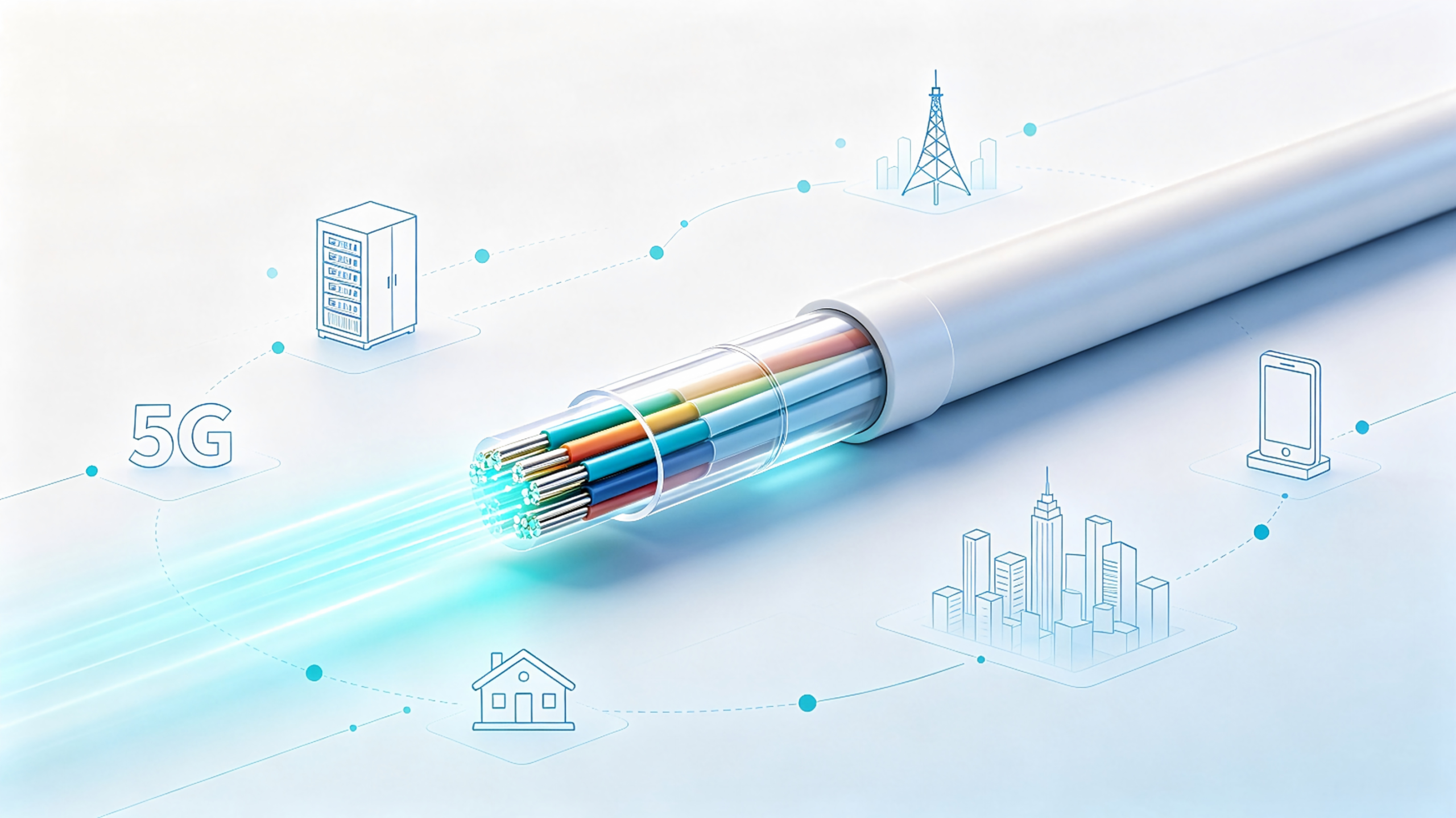
As the world grows more connected, the demand for faster and more reliable communication networks continues to soar. Among the many innovations shaping this landscape, ribbon cable stands out as a key enabler of modern infrastructure. Its unique design delivers tangible benefits across a wide range of real-world applications.
Hyperscale data centers operate at a scale where every inch of space and every watt of power matters. Ribbon cable allows operators to fit more fibers into a single cable, supporting the massive, high-speed connections required between racks and rows. Its organized structure also simplifies cable management, making maintenance and upgrades far more efficient in these sprawling facilities.
5G and Wireless Backhaul
The rollout of 5G networks demands a dense web of connections between cell sites and core networks. Ribbon cable provides the capacity and reliability needed for wireless backhaul, enabling carriers to support growing mobile traffic without proportionally increasing physical infrastructure. Its fast deployment characteristics help accelerate network expansion in both urban and suburban areas.
Metropolitan Area Networks
Cities generate enormous volumes of data every day, and metropolitan area networks must keep pace. Ribbon cable enables service providers to build dense, high-capacity rings and connections throughout urban areas. Its compact design is particularly well-suited to city environments, where conduit space is limited and construction costs are high.
Submarine and Long-Haul Routes
For spanning oceans and continents, ribbon cable offers the scalability that long-haul networks require. Operators can pack more capacity into each cable, maximizing the value of expensive submarine and terrestrial routes. This makes ribbon cable an essential building block for global connectivity.
Fiber-to-the-Home and Access Networks
As demand for high-speed internet reaches every household, access networks must deliver more bandwidth to more subscribers. Ribbon cable supports efficient fiber-to-the-home deployments by allowing technicians to connect multiple homes quickly and reliably. Its structured format reduces installation time and minimizes disruption, benefiting both operators and end users.
Industrial and Specialized Environments
Beyond traditional telecom, ribbon cable also serves industrial settings where durability and organized cabling are essential. Manufacturing facilities, energy installations, and transportation systems rely on ribbon cable to maintain stable, high-performance connections in demanding conditions.
In short, ribbon cable represents a practical and forward-looking solution for building the high-capacity networks that tomorrow’s digital world will require. Its combination of efficiency, scalability, and durability explains why it is increasingly becoming the backbone of modern communication systems.