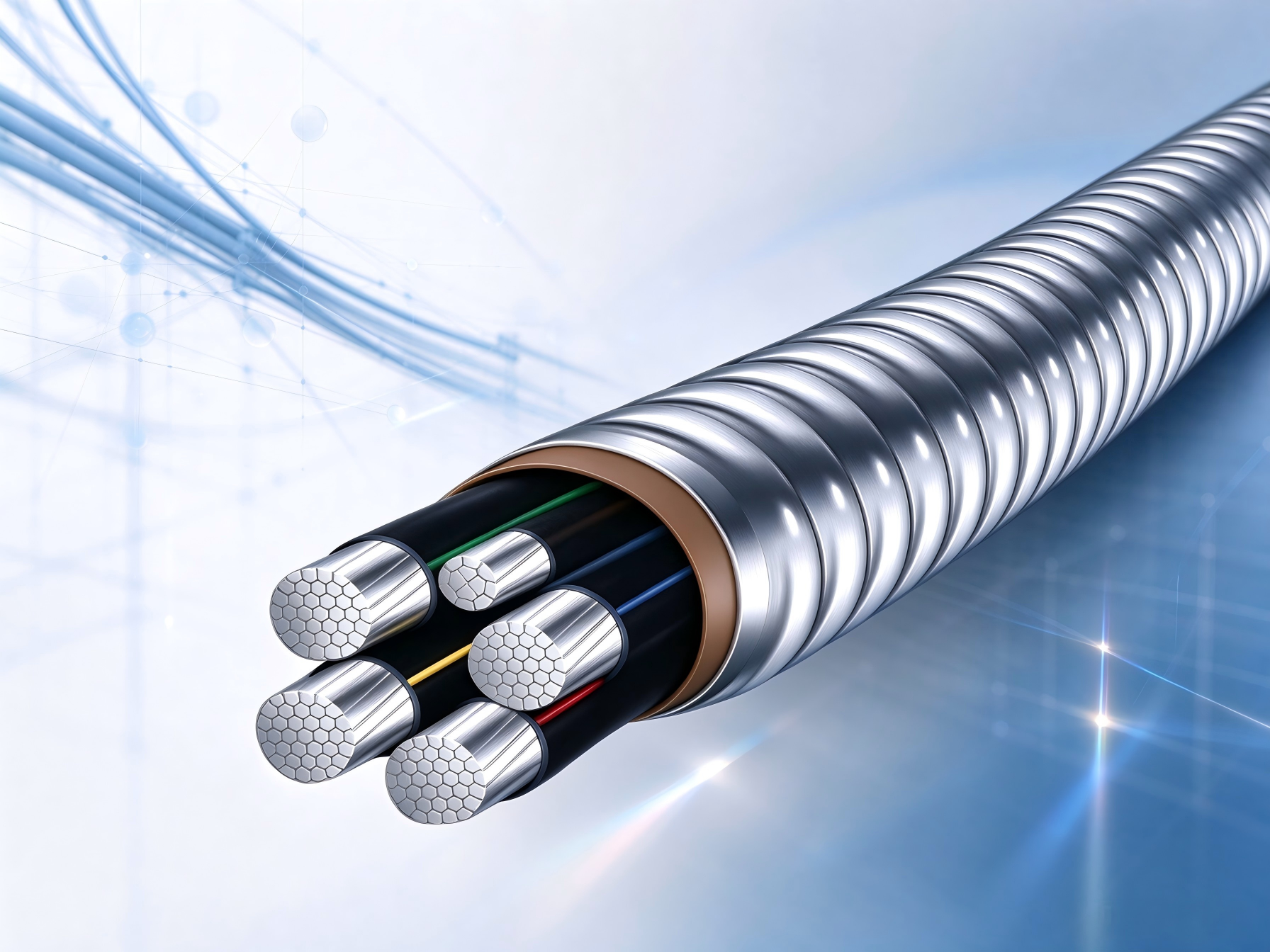
Aluminum alloy cables are widely used across multiple sectors due to their lightweight, corrosion resistance, and cost efficiency.
Building & Construction
In commercial and residential buildings, aluminum alloy cables serve as feeder lines for lighting and electrical equipment in offices, shopping malls, and factories. Their flexibility and small bending radius make them suitable for narrow shafts, cable trays, and confined installation spaces. Interlocked armored types can be laid without cable trays, reducing overall installation costs.
New Energy Projects
The cables are increasingly adopted in solar and wind power facilities. In photovoltaic bases, aluminum alloy cables withstand extreme temperature variations, covering the full transmission link from modules to booster stations. Their corrosion resistance and temperature tolerance make them well-suited for harsh outdoor environments in renewable energy installations.
Industrial & Infrastructure
Industrial plants, chemical facilities, and mines use aluminum alloy cables for power distribution where corrosion resistance and mechanical durability are required. Airports, subway systems, and large public venues also employ these cables for reliable power transmission in demanding environments.
Power Grid Renovation in Complex Terrain
In mountainous or environmentally sensitive areas, aluminum alloy cables offer practical advantages over overhead lines. In scenic area renovation projects, underground aluminum alloy cable laying avoids heavy ice zones and reduces construction costs while minimizing ecological impact.