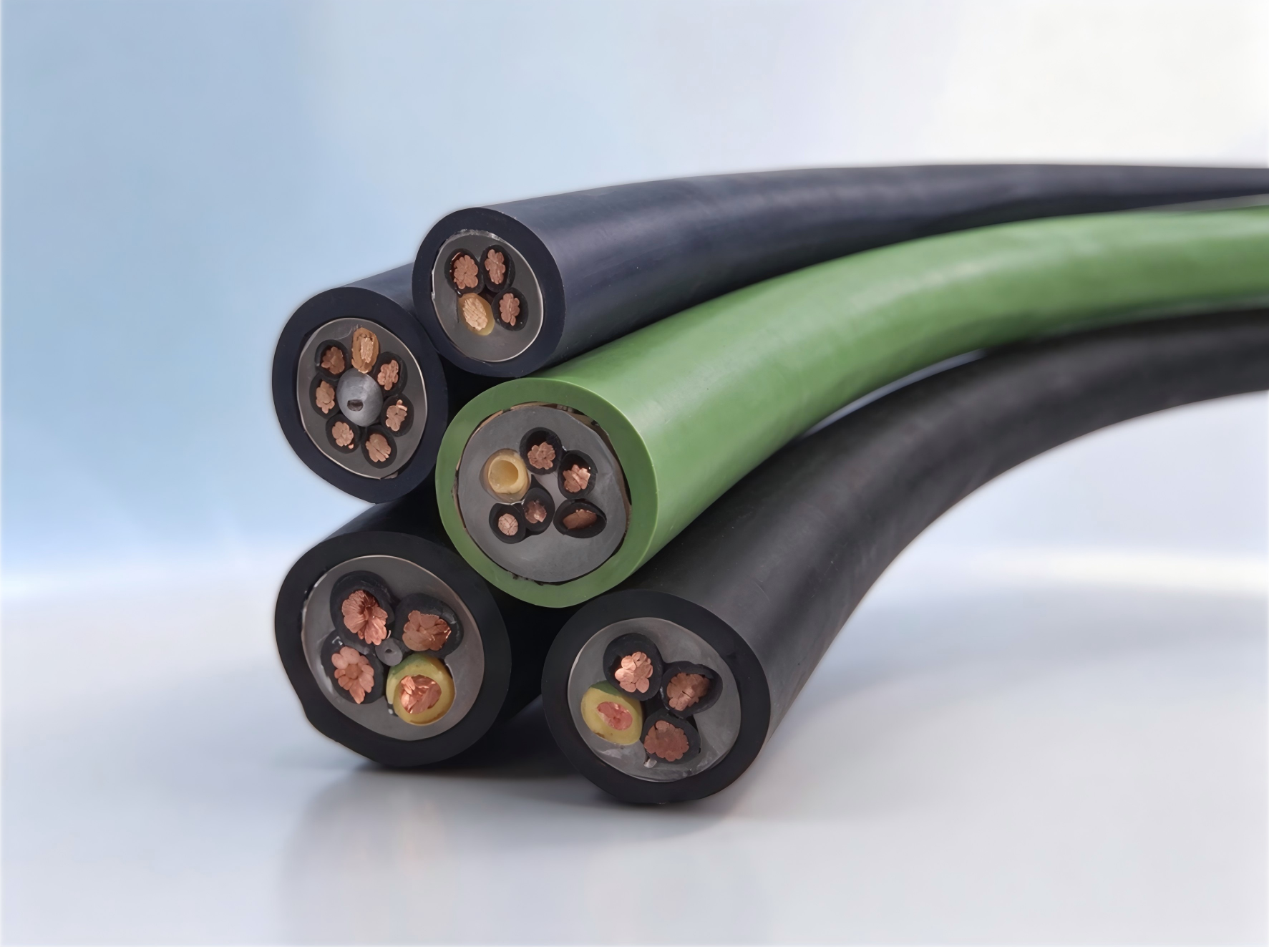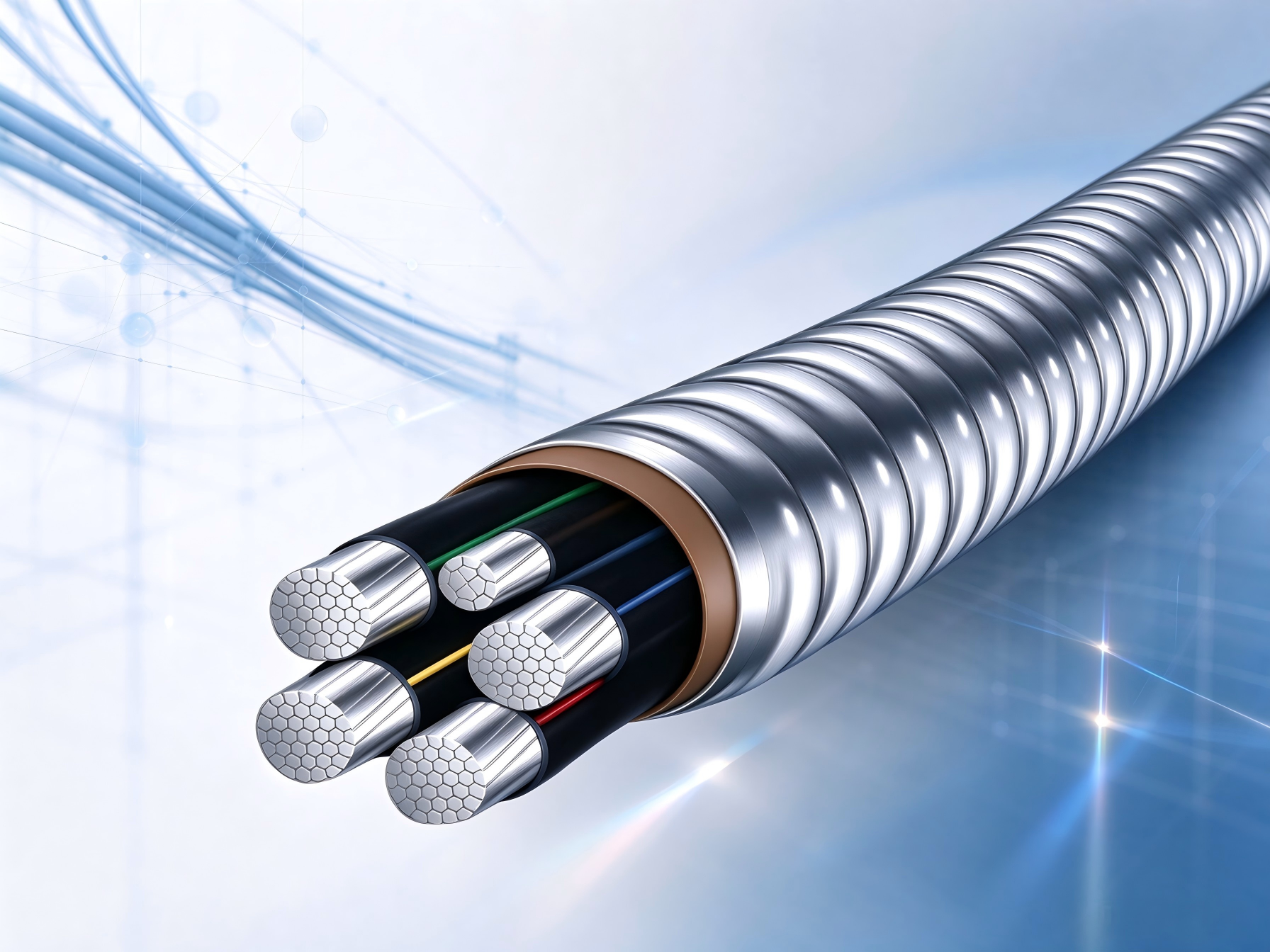
Flexible cables are defined by international standards as cables “required to be capable of being flexed while in service.” Unlike conventional cables that are merely bendable during installation, true flexible cables are engineered to maintain electrical integrity under repeated motion—continuous flexing, torsion, and tight bending radii—without conductor breakage or sheath failure.
Key Features
- Ultra-fine wire stranding: Conductors are built from a large number of fine strands, reducing mechanical stress during movement and preventing fatigue failure.
- Advanced jacketing materials: Specialized compounds deliver a balance of flexibility, abrasion resistance, and thermal stability.
- Proven flex life: Critical industrial cables are designed and tested to withstand extended cycling under continuous motion.
- Optimized internal construction: Sliding layers and separators between insulation and sheath minimize internal friction and extend service life.
- Optimized lay design: Balanced stranding and cabling geometry distribute mechanical loads evenly across conductors during dynamic motion.
These characteristics make flexible cables indispensable wherever equipment operates under continuous motion, where cable fatigue can halt operations or compromise safety.