Choosing the right optical fiber cable begins with understanding the structural philosophies behind Stranded Tube and Central Tube designs. Each excels in different environments, and selecting the right one ensures long-term reliability and cost-efficiency for your network.
Below is a breakdown of their core differences and standout features.
Stranded Tube Cable
Structure & Design Philosophy
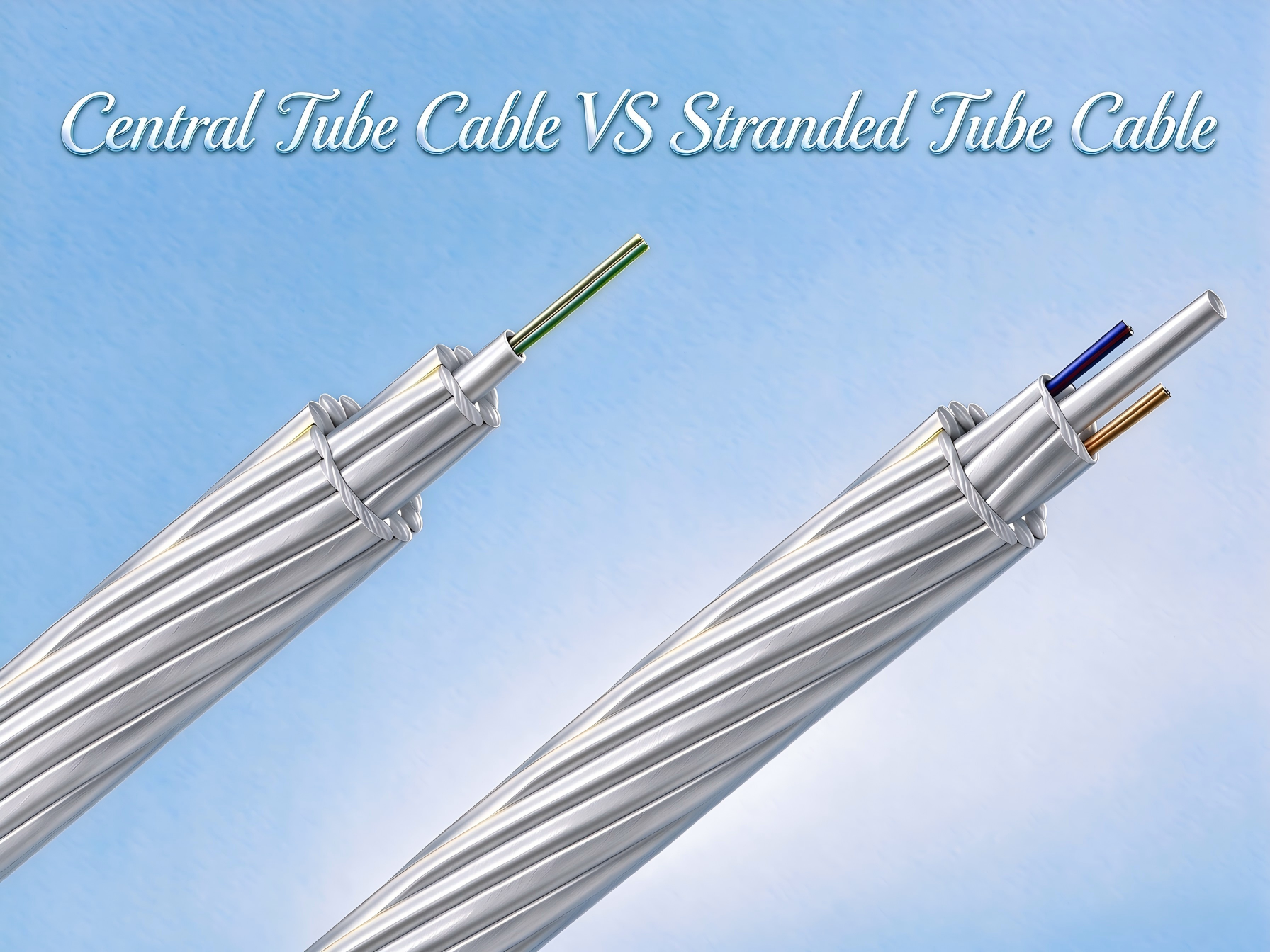
Optical fibers are housed within multiple protective loose tubes. These tubes, together with fillers, are stranded around a central strength member in a helical or S-Z pattern, forming a compact, round cable core.
Key Features & Advantages
Superior Mechanical & Environmental Protection: The stranded structure delivers excellent tensile strength and crush resistance. The central strength member bears the load, while the stranding process enables precise control of fiber excess length, ensuring stable performance under temperature fluctuations.
Reliable Water Blocking: The multi-tube construction, combined with water-blocking materials, creates a robust barrier against moisture ingress, making it ideal for harsh outdoor environments.
Easy Mid-Span Access & Flexibility: With fibers separated across multiple tubes, technicians can access a specific tube for splicing or maintenance without disturbing the rest. The design is also more flexible, allowing tighter bending radii and easier slack storage.
Scalable to High Fiber Counts: This structure is the industry standard for high-density networks. Large fiber counts are achieved simply by adding more tubes, making it ideal for backbone and long-haul routes.
Best Suited For
Backbone networks, long-distance outdoor deployments, and environments demanding high mechanical reliability and scalability.
Central Tube Cable
Structure & Design Philosophy
A single, central buffer tube houses the optical fibers, often as a ribbon stack or fiber bundles. Strength members, typically two parallel rods, are embedded directly into the outer jacket rather than occupying the cable core.
Key Features & Advantages
Compact & Lightweight: Eliminating the central strength member and using a single tube results in a significantly smaller diameter and lighter weight, making the cable highly cost-effective and easier to handle during installation.
Ideal for Space-Constrained Environments: The slim profile and smaller bend radius make this cable perfect for narrow ducts, crowded conduits, or aerial setups where weight and wind load matter.
Cost-Effective for Moderate Fiber Counts: The simpler construction reduces material usage and manufacturing complexity, offering an economical solution for low-to-moderate fiber count applications.
Fast Access for Ribbon Fibers: When configured with fiber ribbons, the central tube allows quick access to the entire fiber stack, enabling efficient mass fusion splicing.
Best Suited For
Access networks, short-haul connections, space-restricted duct installations, and scenarios prioritizing cost-efficiency and compactness over high tensile strength.